Visual Journal Prompt: In the Garden


In the Garden
For years, I treated the Bible like a crystal ball, searching for signs, answers, and guarantees about my future. But I was often left confused, wondering why it didn’t work that way. Then someone said something that shifted everything: The Bible is not about you. At first, it felt disappointing.
Enjoy the Journal Prayer Below
But over time, I realized the goal wasn’t just finding answers, it was finding God. When I stopped using Scripture to serve my own plans and started seeking Jesus Himself, everything changed. He didn’t just give me direction, He became my direction. And in knowing Him, I found the guidance and transformation I had been missing all along.
In the Garden
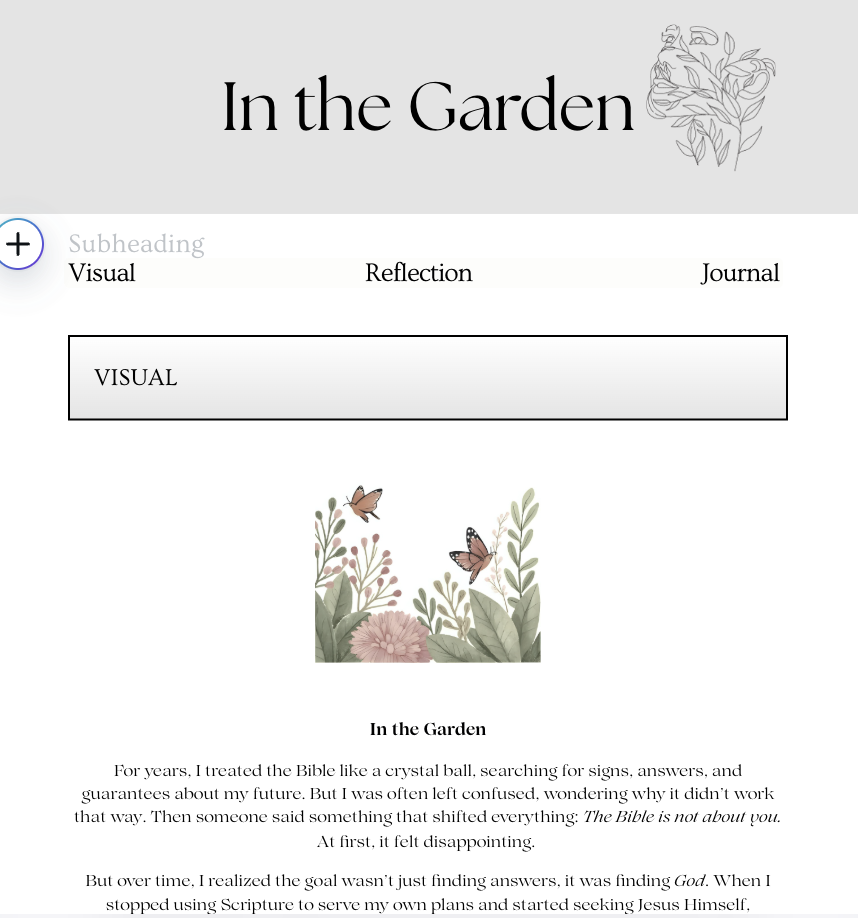
We live in a world addicted to the chase, success, approval, beauty, comfort. Like butterflies we sprint after them, hoping to catch something that will finally satisfy. But more often, we’re left tired and empty-handed. The Christian life offers a different image: not a chase, but a garden that draws butterflies in. Not instant results, but deep, patient growth. As we root our lives in Scripture, prayer, and communion with God, something begins to change, not just our behavior, but our desires.
The butterflies may naturally come to our garden now, but they’re no longer the goal. The garden, the presence of God Himself, becomes the treasure. Unlike the fragile beauty of what we build for ourselves, a life tended with God bears fruit that endures. The world offers fleeting joy. But in Jesus, we find a joy that doesn’t depend on what comes and goes, but on the One who never changes.
Garden Anaology
Imagine someone sprinting through a field, trying to catch butterflies. The butterflies of life; success, money, recognition, beauty, comfort. Every now and then, they might catch one, but more often than not, they end up exhausted, running in circles, always chasing and never satisfied.
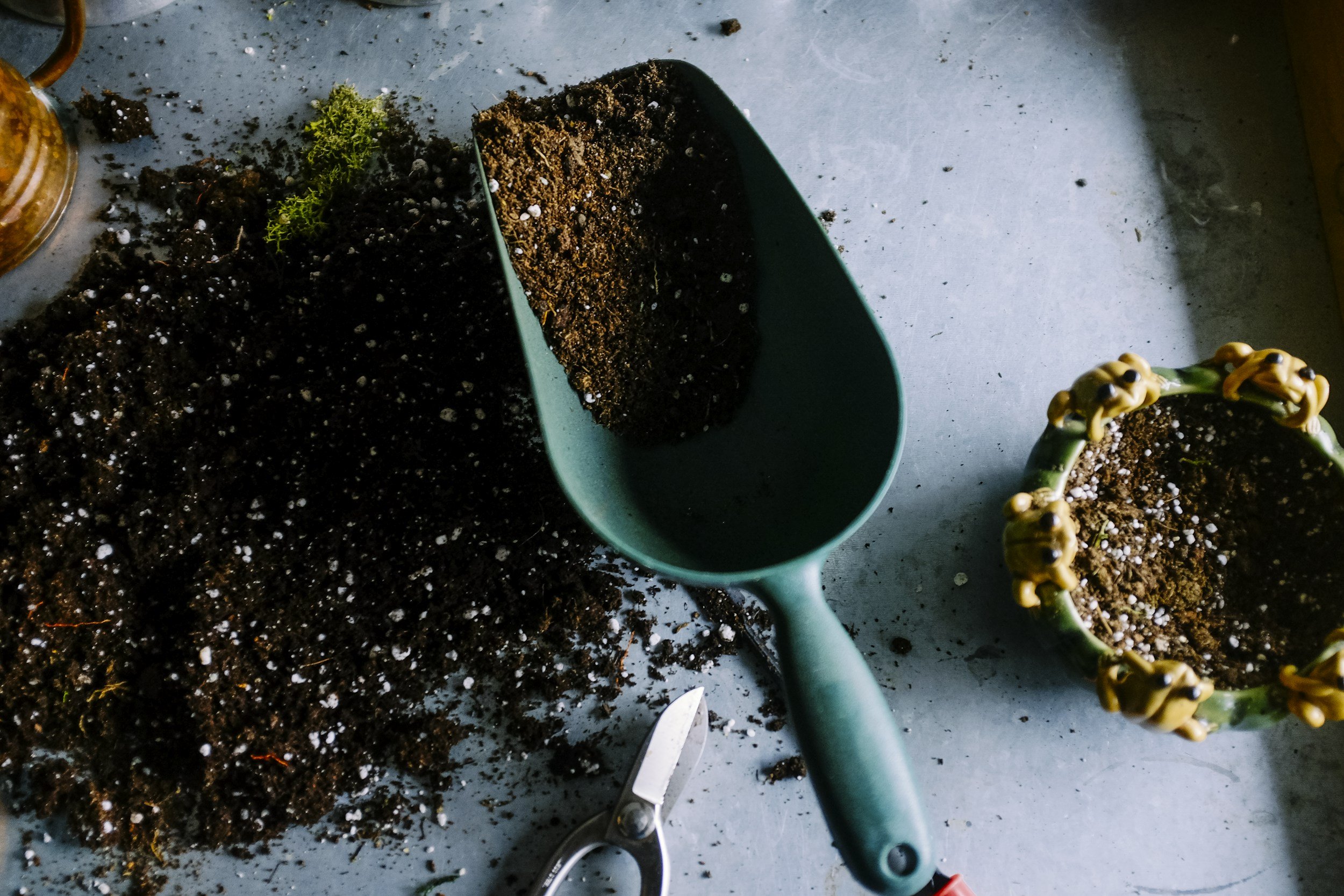
Now picture someone else who plants a garden. They dig, water, prune, and care for it patiently. And over time, it begins to bloom. Slowly, the butterflies come not because they were chased, but because the garden drew them in.
As you begin to build a life with God, through Scripture, prayer, and community, you start tending the garden of your soul. In the quiet, steady rhythm of that work, your heart begins to change. Communion with God reshapes your desires. Gradually, almost without noticing, you begin to want what He wants. You stop chasing what the butterflies once promised, not because those things are inherently bad, but because the garden itself, grown from intimacy with Him, has become far more beautiful. It draws them in, but you’re no longer drawn away.
The deeper you dig in, the more you begin to see: it's in truly knowing Him that your heart and desires are quietly transformed, the more you begin to find joy, even when the butterflies are few and far between. You discover patience when life feels uncertain, kindness even in the middle of hardship, and peace when the future is unclear. Sometimes the butterflies come, and sometimes they don’t, but that’s okay. Because now, you’re resting in the beauty and stillness of the Garden, something the butterflies could never give.
Now, speaking to the garden’s beauty; people can build gardens of their own ambitions, gardens that attract butterflies too. But often, they become so focused on the butterflies that they neglect the garden itself, and it begins to wither. The beauty of the Garden doesn’t hold them there.
But the power of the garden that blooms from closeness with God is different. In that kind of garden, God gives the growth. We do the tending, but He is the source of life and because of that, the beauty of the garden is something far greater than anything we could build on our own. The splendor of a garden grown by God will always surpass the fleeting appeal of the butterflies this world offers.
Yes, it takes work. Some seasons, parts of your garden will wither; in others, they’ll thrive. Sometimes your efforts may feel fruitless. But still, you stay because the peace of His presence and the beauty of the garden itself are worth every bit of the tending. And in the seasons when your garden suffers, you hold onto the hope of what’s happening beneath the surface, what’s being nurtured unseen and the promise of what will eventually bloom. You’ve already tasted the beauty before, and you know it will come again.
In the end, we’re all choosing between two ways of living: a life spent chasing butterflies, temporary pleasures that fade and never truly satisfy or a life rooted in knowing Jesus, where lasting joy, deep peace, and a heart at rest are found. The answers you’re searching for may not come the way you expect, but they will be better. Because in getting to know Him, He begins to transform you, your wants, your desires, and the entire direction of your life.
And in Him, you receive what your soul was always truly longing for, not just peace from Him, but peace found in Him. And before long, you’ll find yourself longing to share with others what you've discovered in this peaceful garden.
I can show you how. I can model it, encourage you, and explain what to do. But the only way to truly know is to step into planting a garden yourself. And when you do, I promise you’ll find the beauty of him. And the butterflies of life will become just visitors; brief joys to admire, but no longer distractions to chase when compared to the beauty of the Garden you’re resting in..
Enjoy the Journal Prayer Below

Journal Prompts
In what ways have I approached the Bible as a tool to get answers, rather than a way to know God Himself? (How might this mindset have shaped my expectations of God and how could it be holding me back from deeper relationship with Him?)
What would it look like for me to shift from seeking direction to seeking communion? (How might my prayers, Bible reading, or spiritual habits change if my goal was to know Jesus more, rather than to simply find clarity about my next step?)
Am I chasing butterflies?"(What are the things I find myself pursuing for meaning, security, or satisfaction—success, recognition, comfort, control? How have these pursuits shaped the pace and posture of my life?)
What do I truly want? (As I spend time with God, how are my desires shifting? Are there things I used to long for that no longer hold the same pull? What does it look like to want what God wants?)
What has the garden taught me about peace? (When have I experienced the kind of peace that comes not from answers or outcomes, but from simply being with God? How can I return to that space more often—even when life feels uncertain?)
Enjoy the Journal Prayer Above