
I recently watched a show where a rabbi said something that deeply resonated with me. He was speaking to someone who wasn’t religious and wasn’t even sure if he believed in God. And yet, rather than dismissing the man’s uncertainty, the rabbi leaned into this mans unbelief and doubt. He said that a significant part of the religious experience is wrestling with the idea of God, who God is, who God isn’t, and even whether God exists at all. He wasn’t defensive. He was inviting. Encouraging. His tone was less about correcting and more about accompanying the man in his search. That struck me. Because he captured something I think many people, especially those on the outside looking in, don’t realize about faith: that doubt and faith are not enemies. In fact, they often walk hand in hand.
The rabbi’s words stayed with me because they mirrored my own journey. I believe in God, but not because I never doubted. Quite the opposite. My belief was shaped through doubt.
I’ve wrestled with questions about God’s existence, His nature, His justice, His silence. I’ve sat with Scripture that troubled me, prayed prayers that seemed unanswered, and stared into the silence wondering if anyone was on the other side. And yet, those very moments didn’t lead me away from faith—they led me deeper into it. Over time, they became the soil in which a deeper, more resilient trust grew. One of the biggest misconceptions people often have about Christians is that we’re people who’ve arrived. That we have God neatly boxed up, theology clearly outlined, and answers to every question nailed down.
This perception creates a false dichotomy between “us” and “them” between those who believe and those who doubt. It suggests that you must possess a perfect spiritual maturity in order to begin this journey of faith. When in reality. You are where you are and that’s where you start.
Faith isn’t the absence of doubt. It’s the decision to trust in the midst of it.
Faith doesn’t mean having all the answers, it means continuing to seek, to knock, to ask, even when the answers are slow in coming. It means walking forward even when the path isn’t fully lit. Jesus never demanded unshakable certainty from those who followed Him. He invited people into relationship. Think of the father who cried out to Jesus, “I believe; help my unbelief!” (Mark 9:24). Jesus didn’t reject him. He met him in his honest tension between faith and doubt.
In my own life, doubt hasn’t been a detour from faith; it’s been the path to deeper faith. Every time I questioned something about God’s goodness, about suffering, about the reliability of Scripture, I was compelled to go deeper. To dig. To read. To pray. To seek out people who were wiser than me. And each time, I didn’t emerge with perfect clarity, but I came away with a stronger foundation. Why? Because my faith was no longer borrowed. It had been tested. I had wrestled with God, like Jacob, and though I walked away limping, I also walked away blessed.
Many people are comfortable with a simple faith, and that’s beautiful. But for others, like me, and perhaps like the person the rabbi was speaking to, questions are unavoidable. For us, asking hard questions is how we love God with our minds. It’s how we explore the depth of who He is. And I believe God welcomes that exploration. He’s not threatened by our questions. He doesn’t panic when we doubt. He knows that real faith is forged in the fire of honest seeking. He knows that when we seek, we’ll find, because His truth holds up.
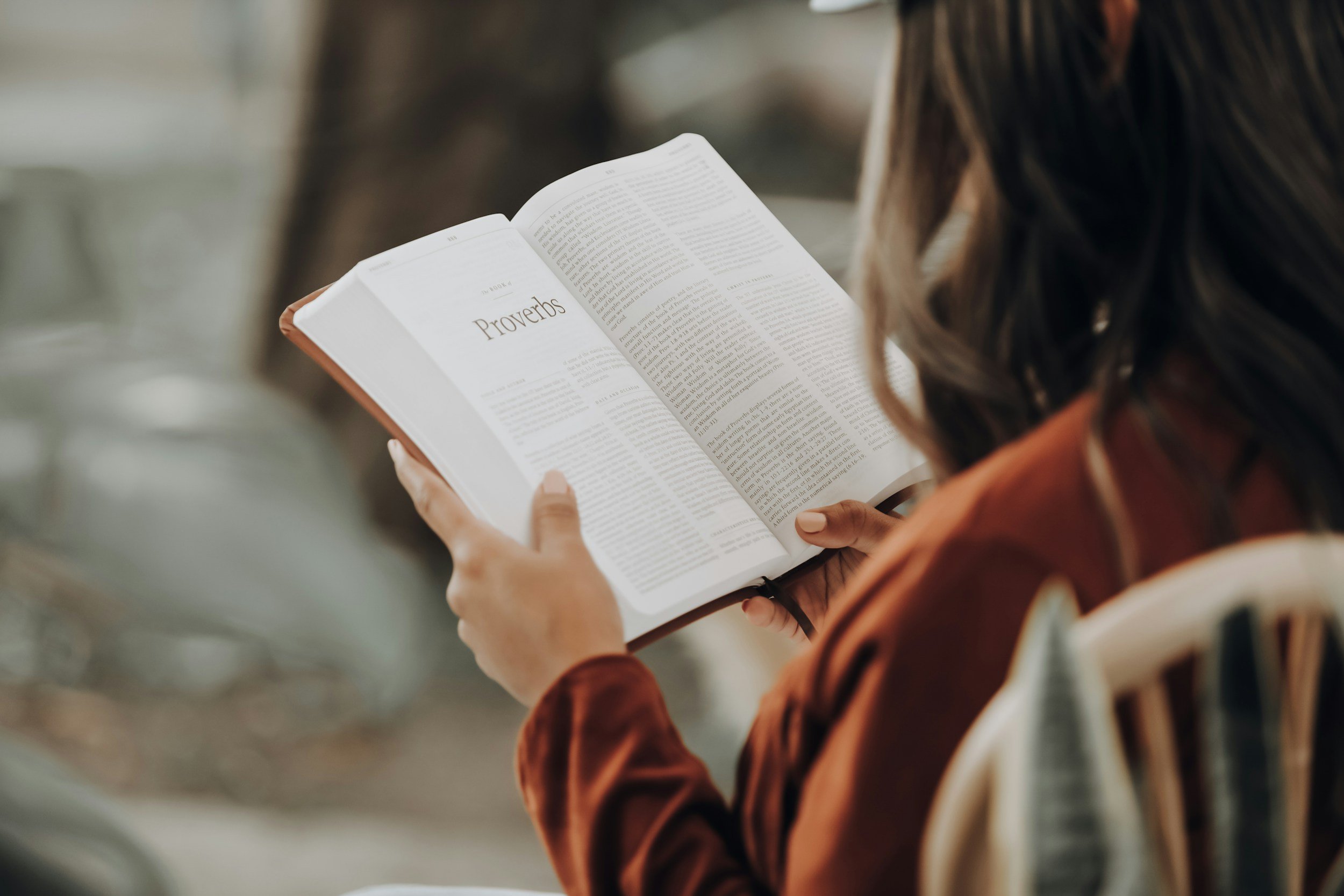
If I were sitting across from someone today who was unsure about God. I would tell them what I needed to hear when I was in their shoes: It’s okay to doubt. It’s okay to ask hard questions. Your questions are not a threat to God, and they’re not a disqualification from faith. In fact, I’d say this: your doubt may be the very thing that leads you to Him.
If you’re someone who’s unsure about faith, who has more questions than answers, I want you to hear this: you’re not alone and you’re not disqualified.
One of the biggest mistakes we’ve made as Christians is acting like faith only begins once you have it all figured out. That somehow you have to show up certain, strong, and put together. But that’s just not how it works. Faith isn’t a straight line, and it’s definitely not a one-time decision that instantly makes everything clear. It’s a journey. One that includes doubt, mistakes, detours, and restarts. So here’s the real question for those of us who say we follow Jesus: are we creating space for people who are wrestling? Are we offering grace, not just to ourselves, but to others who are searching? Or are we standing at a distance, waiting for people to find their way to God on their own, expecting them to have it all sorted out before they belong?
And here’s the thing: God isn’t afraid of your questions. He doesn’t flinch at your confusion. He invites it. Because when you’re willing to stay in the tension and keep asking, keep seeking, He shows up. Sometimes quietly. Sometimes in unexpected ways. But He’s there. Not just in the answers, but right in the middle of the wrestling.
Faith isn't about getting it right all the time. It's about walking with God, especially when the path doesn’t make sense. And in that walk, through all the doubt and struggle, something real happens: we don’t just learn about God. We meet Him. For ourselves. And that changes everything. So if you’re feeling lost, unsure. This is actually be where it starts.
WHEN WISDOM ENCOUNTERS SCRIPTURE
We often think doubt means our faith is broken, but research tells a different story. Psychologists like Kenneth Pargament (The Psychology of Religion and Coping, 1997) have found that spiritual struggle, including doubt, can actually deepen faith. When people honestly confront their questions rather than hide from them, they often come out with a belief that’s more personal, resilient, and real.
Neuroscience supports this too. Our brains crave certainty, but it’s in moments of uncertainty and questioning that the brain engages deeper reasoning. Studies by Elizabeth Krumrei-Mancuso and colleagues (Journal of Positive Psychology, 2017) show that people who practice intellectual humility, willingness to admit they don’t know everything, tend to grow in understanding and conviction. Tali Sharot’s research (The Influential Mind, 2017) also highlights how openness to doubt helps reshape beliefs. In short, doubt doesn’t destroy faith. It stretches it, strengthens it, and sometimes even saves it.
The more we examine both Scripture and the world around us, the more clearly we see evidence of God’s presence woven throughout creation. Where does this kind of wisdom truly lead us? It resonates for a reason, it works, to a point. But it’s not complete. There’s a missing piece it can’t provide, a limit it can’t cross. What does doubt reveal that’s deeper than what our research says?
Doubt exposes our limits, our lack of knowledge, our weakness, our humanness. It reminds us that we don’t know everything, and that we were never meant to. But that’s not something to be ashamed of. It’s actually the starting point of something greater. Because doubt, at its core, is an invitation. It stirs a longing for something, or someone, beyond ourselves. If we’re willing to follow it, doubt can lead us to the idea that maybe there is something all-knowing, something steady when we are not. And here’s the promise: if you seek, you will find.
God isn’t hiding. He’s woven into the fabric of creation and written into every page of Scripture. He invites us to ask, to wrestle, to search because He knows that those who truly seek truth will eventually find Him.
Even the resurrection of Jesus invites doubt. And maybe it should. It’s so unbelievable, so far beyond what we could ever accomplish, that it almost demands we stop and question. But that’s the point, it is beyond us. Only someone greater could do what we never could. So in the end, doubt doesn’t have to drive us away from God. It’s a gift that can lead us straight to Him.
Scripture is full of people who questioned God. Job cried out in confusion and pain. David poured out his heart in the Psalms, often swinging between trust and despair in the same breath. Thomas refused to believe in the resurrection without evidence and yet Jesus met him with compassion, not condemnation. These are not stories of failure; they are stories of authentic relationship. God doesn’t want robotic faith. He wants real relationship. And relationships, like any human relationship, involve questions, frustrations, and moments of silence. They involve seasons of distance and closeness, of clarity and confusion. That’s what makes them real.
James 1:5 Says,
“If any of you lacks wisdom, you should ask God, who gives generously to all without finding fault, and it will be given to you.”
Mark 9:24 Says,
“Immediately the boy’s father exclaimed, ‘I do believe; help me overcome my unbelief!’”
Jude 1:22 Says,
“Be merciful to those who doubt.”

Doubt and Unbelief is an invitation. It’s not the enemy of faith, it’s often where faith begins.
Doubt reveals our limitations, our inability to know and control everything. It’s a mirror that shows us we don’t have all the answers. And in that confusion, in that uncertainty, we’re drawn to Jesus, not as people who have it all together, but as people desperate for truth that goes beyond us. To come to Jesus, we have to let go of the idea that we can fix it all on our own. That shedding of self is often painful, and it starts with doubt, the realization that we need something more, someone, greater.
And that’s what makes the cross and resurrection so striking. They should sound unbelievable because we could never pull off anything like that ourselves. The resurrection invites our doubt precisely because it reveals something entirely outside human strength. It’s meant to shake us. Not to push us away, but to pull us in. To show us that only someone beyond us, someone divine, could offer the kind of rescue we truly need.
Related Series Articles:
